
Published: August 8th, 2025 / Reading Time: 8 minutes | Author: PiXENDA Team
The digital marketing landscape is experiencing its most significant shift since Google’s inception. While traditional SEO focused on ranking for keywords on search engine results pages, a new paradigm is emerging: AI SEO. This isn’t just another marketing buzzword – it’s a fundamental change in how consumers discover and choose businesses online.
The Consumer Behavior Revolution
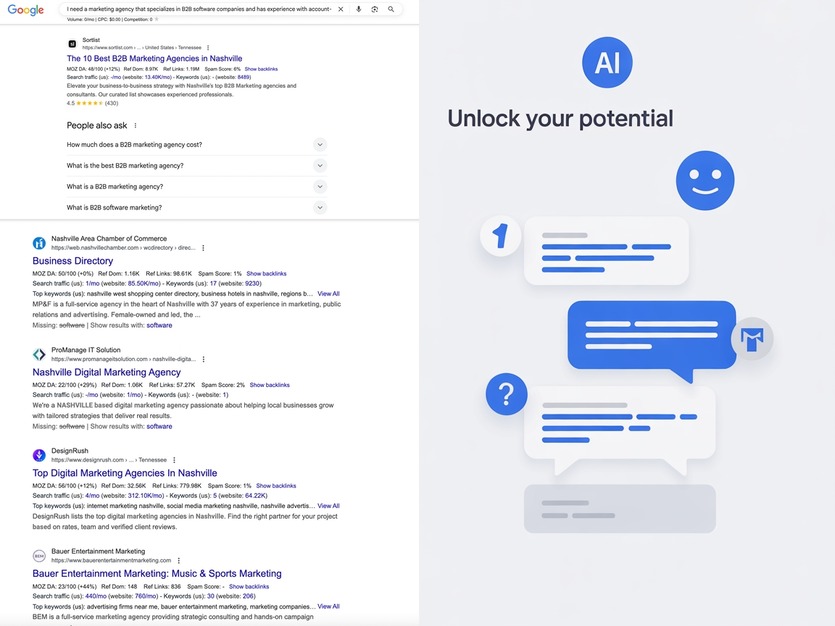
Consider this scenario: instead of typing “best marketing agency Denver” into Google and scrolling through dozens of results, a potential customer opens ChatGPT and says, “I need a marketing agency that specializes in B2B software companies and has experience with account-based marketing. Can you recommend someone in the Denver area?”
The AI doesn’t just provide a list of links. It gives personalized recommendations with specific reasons why each agency would be a good fit, essentially completing the entire research phase that traditionally required hours of clicking through websites, reading reviews, and comparing options.
This shift in consumer behavior is creating a new category of high-intent traffic. Recent studies show that customers coming from AI recommendations are worth 4.4 times more than traditional Google clicks because they arrive pre-qualified and ready to make decisions.
Why AI Recommendations Convert Better
When customers use AI tools for business recommendations, they’re engaging in a consultative process rather than a simple search. The AI asks follow-up questions, understands context, and provides reasoned explanations for its recommendations. By the time a customer contacts a business, they’ve already been “sold” on why that business is the right choice.
How AI SEO Differs from Traditional SEO
Beyond Keywords and Rankings
Traditional SEO was built around the premise of ranking for specific keyword phrases. Businesses would optimize their content for terms like “Denver marketing agency” or “B2B marketing services,” hoping to appear on the first page of Google results.
AI SEO operates on entirely different principles. AI tools don’t think in terms of keyword density or exact-match phrases. Instead, they analyze content contextually, understanding the intent behind queries and matching businesses to customers based on relevance, authority, and fit.
The Conversation Advantage
Unlike traditional search engines that rely on crawling and indexing web pages based on keywords, AI tools engage in natural conversations with users. They learn about the customer’s specific needs, location, budget, and preferences through dialogue, then make recommendations based on this comprehensive understanding.
This conversational approach means AI tools can provide much more targeted recommendations. When someone asks for a marketing agency, the AI might follow up with questions about industry, budget, or specific services needed before making suggestions.
Trust and Authority Signals
AI platforms evaluate businesses differently than Google’s traditional ranking factors. While backlinks and domain authority still matter, AI tools place heavier emphasis on:
- Reputation across multiple platforms (not just your website)
- Detailed case studies and client testimonials
- Transparency in pricing and services
- Consistent mentions across the web
- Review quality and quantity on various platforms
The Business Impact {#business-impact}
Higher Quality Leads
Businesses that appear in AI recommendations are seeing dramatically higher conversion rates. This makes sense when you consider the customer journey: by the time someone contacts a business recommended by AI, they’ve already been “sold” on why that business is the right choice for their specific situation.
Faster Results Than Traditional SEO
While traditional SEO campaigns often take 6-12 months to show significant results, AI SEO can begin generating traffic and leads much faster. This is because AI tools are constantly learning and updating their knowledge base, rather than waiting for periodic algorithm updates.
Competitive Advantage Window
Most businesses are still focused exclusively on traditional Google SEO, creating a blue ocean opportunity for those who understand AI optimization. Early adopters can establish dominant positions in AI recommendations before their competitors even realize the shift is happening.
Current AI Platforms Shaping Business Discovery
ChatGPT and GPT-4
With over 100 million weekly active users, ChatGPT has become a go-to resource for business recommendations. Its conversational interface makes it particularly effective for complex service-based businesses where customers need guidance in choosing the right provider.
Google’s AI Integration
Google has integrated AI directly into its search results with features like AI Overviews and Search Generative Experience (SGE). This means even traditional Google searches are increasingly influenced by AI-driven recommendations.
Perplexity AI
Positioned as an “answer engine,” Perplexity is gaining traction among users who want direct answers rather than lists of websites to research. It’s particularly popular among professionals and decision-makers.
Claude and Other Enterprise AI Tools
Anthropic’s Claude and other enterprise-focused AI tools are becoming decision-support systems for business purchases, especially in B2B contexts.
Industry-Specific AI Tools
Specialized AI platforms are emerging for specific industries, creating niche opportunities for businesses to establish authority in their vertical markets.
What This Means for Your Business Strategy
The Content Evolution
The type of content that succeeds in AI recommendations is fundamentally different from traditional SEO content. Instead of blog posts optimized for search queries like “how to choose a marketing agency,” businesses need content that positions them as the obvious choice when someone asks AI for specific recommendations.
This requires a shift from educational content marketing to authority-building content that demonstrates expertise, results, and fit for specific customer profiles.
Reputation Management Becomes Critical
Your reputation across the entire internet – not just your website – now influences whether AI tools recommend your business. Reviews on platforms like Yelp, Google, and industry-specific sites like Clutch or Angie’s List carry significant weight in AI decision-making.
Transparency as a Competitive Advantage
Businesses that are transparent about their processes, pricing, and results have significant advantages in AI recommendations. AI tools can easily access and reference this information when making suggestions, while businesses that hide important details may be overlooked.
Industry Examples and Case Studies
Local Service Businesses
A Colorado roofing company optimized for AI recommendations and saw a 300% increase in qualified leads within 60 days. The transformation came from better positioning their expertise and maintaining consistent information across multiple platforms.
Professional Services
An intellectual property law firm shifted focus from broad keyword targeting to specific scenario-based positioning. This change resulted in higher-quality clients who already understood the firm’s specialization before making contact.
E-commerce and Retail
Online retailers are discovering that AI recommendations drive customers with significantly higher lifetime values. These customers arrive with clear intent and strong confidence in their choice.
B2B Software Companies
SaaS companies that appear in AI recommendations report shorter sales cycles and higher close rates, as prospects arrive pre-educated about the software’s fit for their specific use cases.
The Challenges and Considerations
Quality Control Across Platforms
Unlike traditional SEO where you control your website’s content, AI SEO requires managing your reputation across dozens of platforms. This demands more comprehensive and systematic reputation management strategies.
New Success Metrics
Traditional SEO metrics like keyword rankings become less relevant. Success in AI SEO requires new measurement approaches focused on:
- Brand mention frequency and sentiment
- Direct traffic from AI tool referrals
- Lead quality and conversion rates
- Share of voice in AI recommendations
Staying Current
AI platforms update their knowledge bases continuously, requiring businesses to maintain fresh, current information across all platforms rather than updating their website periodically.
Information Accuracy
Ensuring consistent, accurate information across multiple platforms becomes crucial as AI tools cross-reference data from various sources when making recommendations.
Preparing for the AI-First Future
Comprehensive Digital Presence Audit
Understanding how your business currently appears across the internet is the first step. This includes not just your website, but your profiles on review sites, social media platforms, industry directories, and anywhere else your business might be mentioned.
Multi-Platform Reputation Strategy
Building and maintaining a strong reputation across multiple platforms becomes crucial. This isn’t just about getting more reviews – it’s about ensuring consistent, accurate, and compelling information about your business exists wherever potential customers might encounter it.
Results-Focused Content
AI tools favor businesses that can clearly demonstrate their value through specific examples, case studies, and measurable outcomes. Generic marketing language becomes less effective than concrete proof of results.
Industry Authority Building
Getting mentioned in industry publications, “best of” lists, and expert roundups significantly boosts your chances of AI recommendation. These mentions serve as third-party validation that AI tools reference when making suggestions.
Technical Infrastructure
Ensuring your website loads quickly, provides clear contact information, and presents professional credibility signals remains important as AI tools evaluate the quality of businesses they recommend.
The Future of Business Discovery
The Shift from Search to Consultation
We’re moving from a world where customers search for information to one where they consult with AI advisors. This fundamental change requires businesses to think like consultants rather than advertisers.
Personalization at Scale
AI tools can provide personalized business recommendations at scale, considering factors like location, industry, budget, and specific needs. This level of personalization was previously only available through human consultants.
The Role of Traditional SEO
Traditional SEO won’t disappear, but its role is evolving. Businesses will need integrated strategies that address both traditional search and AI recommendation engines.
Industry Disruption Patterns
Just as the internet disrupted traditional advertising and Google revolutionized information discovery, AI is transforming business discovery. The pattern suggests that early adopters gain disproportionate advantages.
Working with AI SEO Specialists
Given the complexity and rapid evolution of AI platforms, many businesses are finding value in working with digital marketing experts who specialize in AI optimization. The strategies that work for traditional SEO don’t necessarily translate to AI recommendations, requiring specialized knowledge and experience.
The businesses that recognize this shift early and adapt their digital strategies accordingly will have significant competitive advantages. Those that continue to focus exclusively on traditional SEO may find themselves increasingly invisible to a growing segment of high-value customers.
At PiXENDA, we’re witnessing firsthand how AI SEO is transforming client results across multiple industries. Our clients who embrace this shift early are positioning themselves for sustained competitive advantages as AI becomes an increasingly dominant factor in customer acquisition.
Key Takeaways
- AI recommendations convert 4.4x better than traditional search traffic
- Consumer behavior is shifting from search to AI consultation
- Early movers gain significant advantages in this emerging landscape
- Reputation management becomes critical across multiple platforms
- Traditional SEO metrics need to evolve for AI optimization
- Transparency and results matter more than ever
Frequently Asked Questions
Q: Will AI SEO replace traditional SEO? A: AI SEO will complement rather than replace traditional SEO. Businesses need integrated strategies addressing both traditional search and AI recommendations.
Q: How quickly can businesses see results from AI SEO? A: Unlike traditional SEO which takes 6-12 months, AI SEO can begin showing results in weeks as AI tools continuously update their knowledge base.
Q: Which industries benefit most from AI SEO? A: Service-based businesses, B2B companies, and local businesses with complex offerings see the strongest benefits from AI recommendations.
Q: How do I know if my business is being recommended by AI tools? A: Monitor brand mentions, track direct traffic sources, and consider working with specialists who can track AI recommendation performance.
Ready to explore how AI SEO could transform your business? The window for early adoption advantage is still open, but it’s closing rapidly as more businesses discover this opportunity.
Contact PiXENDA today to discuss how these emerging trends could revolutionize your customer acquisition strategy. Our team specializes in helping businesses navigate the transition from traditional SEO to AI-optimized digital presence.
About PiXENDA: We’re a forward-thinking digital marketing agency specializing in emerging technologies and innovative customer acquisition strategies. Our expertise spans traditional SEO, AI optimization, and integrated digital marketing approaches that prepare businesses for the future of online discovery.
Related Articles:
- The Evolution of Search: From Keywords to Conversations
- Why Traditional SEO Metrics Are Becoming Obsolete
- Building Digital Authority in the AI Age
Tags: AI SEO, Digital Marketing, Search Engine Optimization, Artificial Intelligence, Business Growth, Customer Acquisition, Marketing Strategy, Future of Search
Share this article